There is something incredibly satisfying about seeing a space before anyone else can see what it could be. When I first walked into this Dallas condo, it wasn't necessarily the finishes or interiors that sold me. It was the potential.
The bones were there, but the space felt dated and lacked personality. I knew almost immediately that I wanted to lighten it up, modernize the finishes, and eventually create a home that felt collected, colorful, and completely different from where it started.
Unlike some of my other investment projects, this wasn't simply about renovating a property for someone else to eventually enjoy. I actually lived here, which gave me the opportunity to take more risks and let my personal style become part of the story.
AFTER
Starting With a Blank Canvas
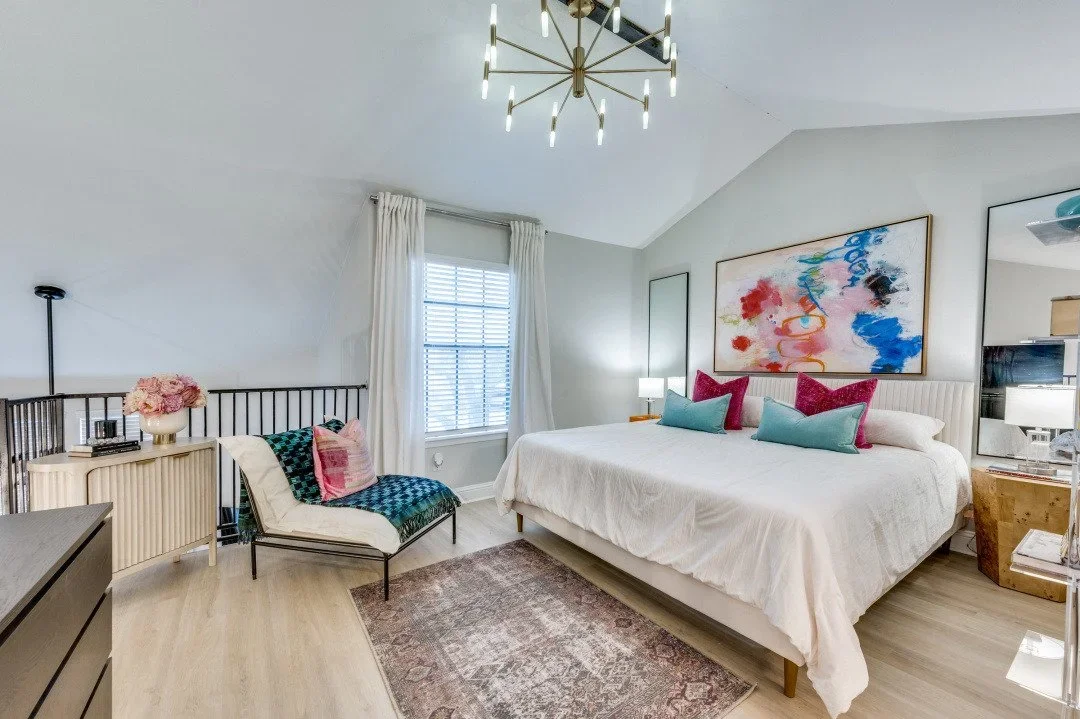
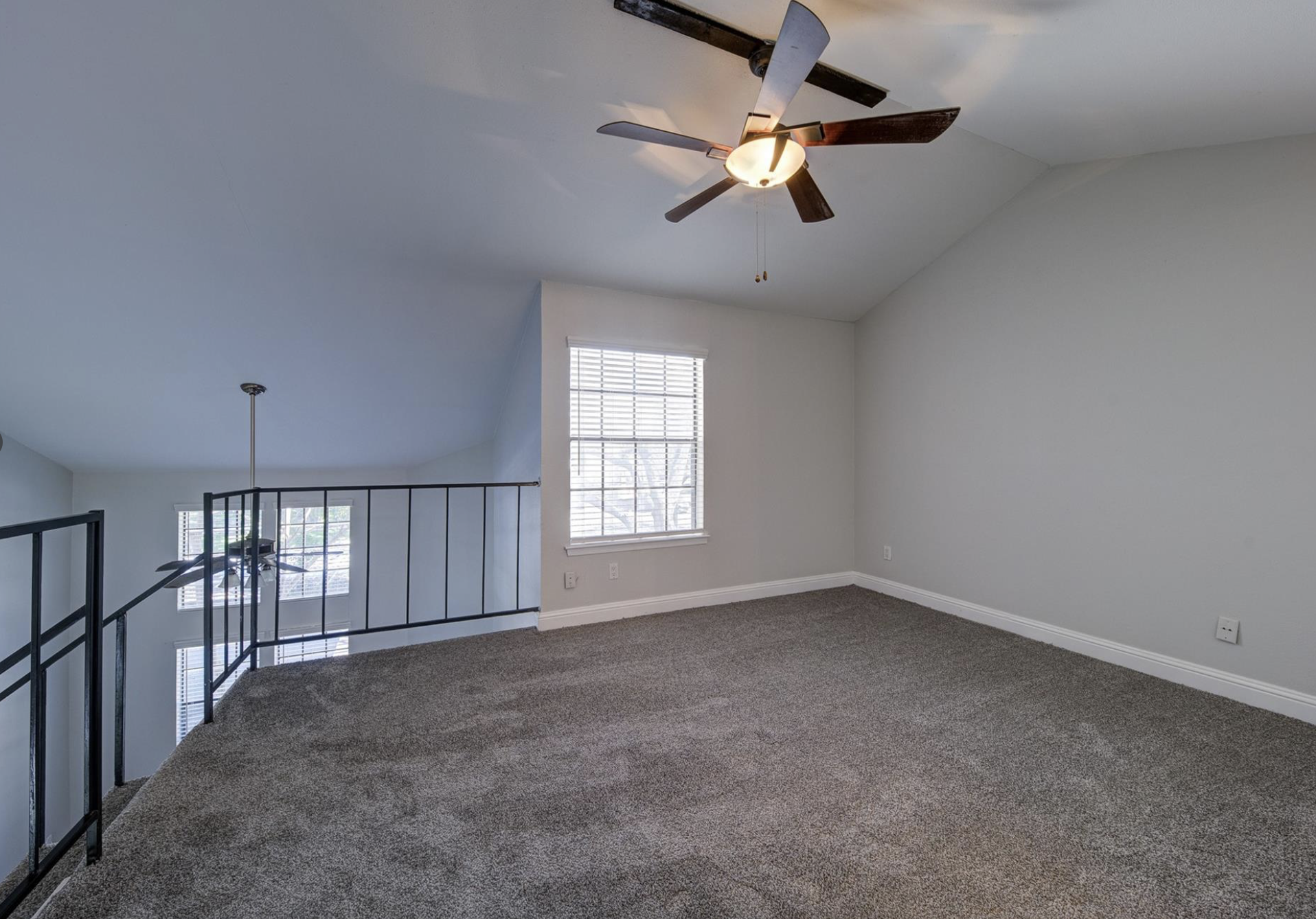
The original condo was very much a product of another era: carpet, cool gray walls, dated lighting, and finishes that didn't take advantage of the architecture or natural light. But I loved the openness of the upstairs bedroom and the vaulted ceiling. Rather than trying to work around everything that already existed, I wanted to simplify the foundation first.
Removing the carpet and introducing light wood flooring immediately changed the room. The lighter flooring reflected the natural light and gave me a much warmer foundation to build from. The ceiling fan was also replaced with a sculptural brass chandelier, which became one of the defining features of the room.
Sometimes changing only a few permanent elements can completely shift the direction of a space.
Designing It Before Buying It
Before bringing everything into the room, I created a digital concept for the bedroom. I've always loved doing this because it allows me to experiment before committing. I can see how the proportions work together, where I want symmetry, whether a color needs to be repeated somewhere else, and which piece should really be the focal point.
For this room, I knew I wanted an upholstered bed, oversized artwork, tall mirrors, burl wood nightstands, and a statement chandelier. The foundation was relatively neutral, which gave me room to have much more fun with everything layered on top of it.
And looking back at the original concept next to the finished room, I love seeing how closely the original idea translated into real life.
THE BEFORE

THE CONCEPT
Letting Color Back In
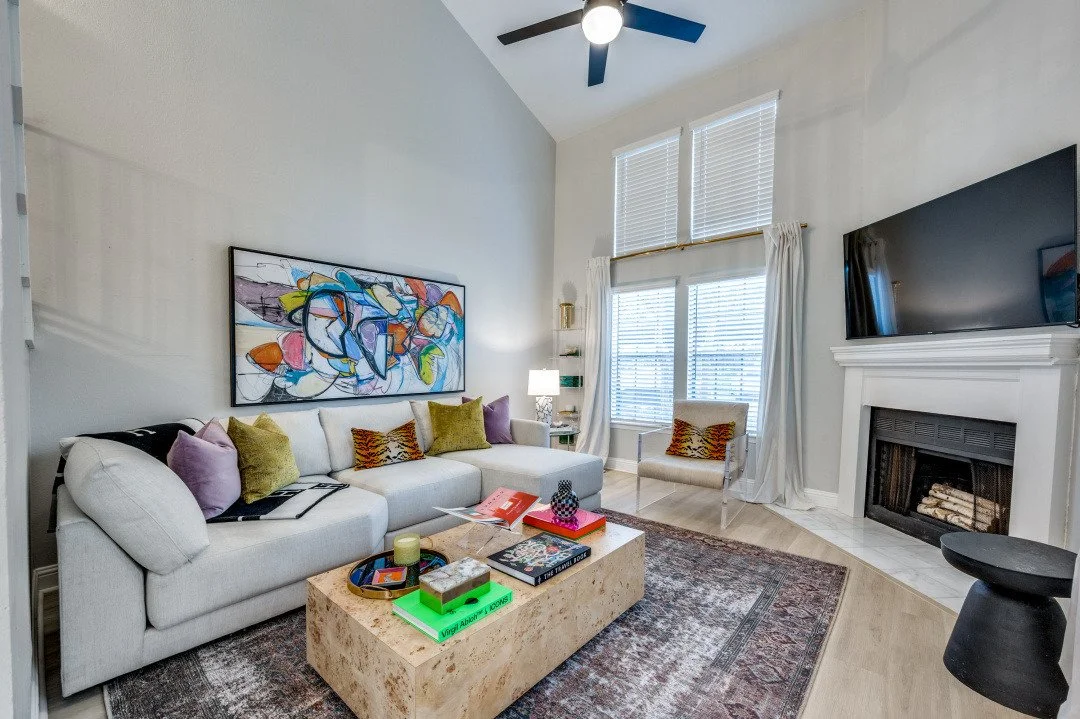
For years, I gravitated heavily toward neutrals. And I still love them. But this condo reminded me how much personality color can bring into a home. Instead of introducing color through major permanent finishes, I brought it in through the artwork, pillows, flowers, textiles, and smaller decorative pieces.
The oversized abstract artwork above the bed became the jumping-off point. From there, I pulled out the pinks, blues, and touches of green throughout the room. Because the bed, walls, flooring, and curtains remained light, those colors didn't overwhelm the space. They gave it energy. It taught me that you don't necessarily need a colorful room to use color. Sometimes a neutral foundation actually gives your favorite colors more room to stand out.
AFTER
Mixing High, Low, Old and New
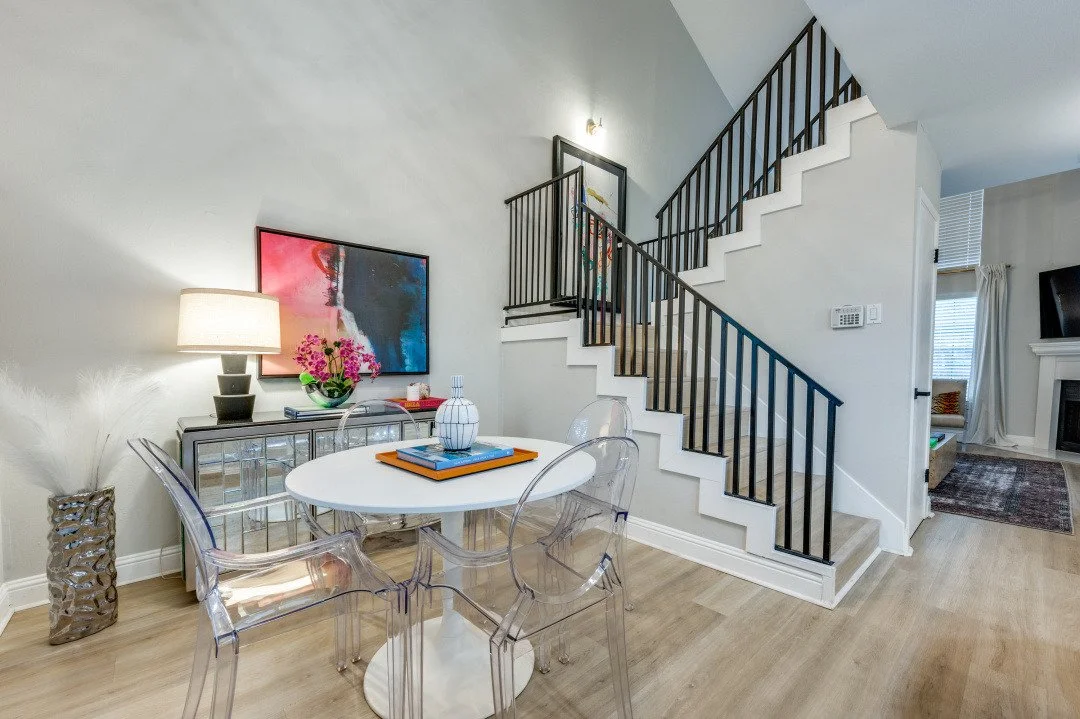
This room also represents something that has become a huge part of how I approach both fashion and interiors: I don't care nearly as much about where something comes from as I do about whether it works. I love mixing investment pieces with affordable finds, vintage and resale with new, and something beautifully made with something completely unexpected.
The burl wood nightstands brought warmth and character against the upholstered bed. The vintage-inspired rug kept the room from feeling too polished. Acrylic and metal added another texture entirely. Nothing needed to be part of a matching set. In fact, I think the room became more interesting because it wasn't.
AFTER
Working With the Architecture
One of my favorite things about this bedroom was also one of its quirkiest: it was an open loft overlooking the lower level. Rather than fighting that architecture, I worked around it.
The openness made the bedroom feel much larger, while the vaulted ceiling gave me the opportunity to use a fixture that might have overwhelmed a traditional bedroom. I also kept the window treatments light and simple because I didn't want to compete with the height of the room or block the natural light.
Learning when not to add something can be just as important as knowing what to add.
Creating a Home Without Losing Sight of Value
Because I've owned and renovated investment properties, I tend to think about interiors from two perspectives at once. I want to love where I live, but I'm also aware that a home is an asset.
That doesn't mean everything needs to be beige or designed for some hypothetical future buyer. I actually think there's a middle ground. I prefer putting money into permanent improvements that have broader appeal, like flooring, paint and updated lighting, while allowing furniture, artwork and styling to carry more of the personality.
That gave me the freedom to make this condo feel completely like me while I lived there without making every permanent decision overly specific.
Looking Back
Seeing these three images together might be my favorite part of this project. The original room shows what I started with. The rendering shows what I imagined. And the finished photograph shows what happened when that idea became real.
Not every detail ended up exactly where I initially envisioned it, and I think that's part of what makes designing your own home so much fun. A room evolves as you live in it.
You find something unexpected. You move a piece from another room. Your taste changes. Something you thought you needed suddenly doesn't feel necessary anymore. I've become much less interested in creating a home that looks finished and much more interested in creating one that feels collected.
This condo taught me that you can make smart decisions about a property and still have fun with it. You can think about resale value and hang the colorful painting. You can invest in the foundation and experiment with everything layered on top. Ultimately, the best version of a home is one that works for your life while you're lucky enough to call it yours.